
What Should I Wear to an Interview?: How the right outfit can set you up for success.

Standing in front of a wardrobe while your brain cycles through every possible interview scenario is a rite of passage for the modern professional. We have all been there, staring at a collection of clothes that somehow feel like they belong to a version of ourselves that doesn't quite exist yet. The pressure to "look the part" is real, especially when you are navigating an environment where you might already feel like you have to work twice as hard to be seen and heard.
Finding the right outfit isn't about vanity. It is about armour. When you walk into that room, or log onto that Zoom call, your clothing should be the silent partner that supports your expertise, not a distraction that seeds self-doubt. At Peak Women, we believe that what you wear should command respect and reflect your ambition while remaining firmly rooted in your personal values.
Understanding the Modern Professional Landscape
The traditional "corporate" dress code has shifted significantly over the last few years. Thanks COVID. While some industries like law or finance still lean heavily into the charcoal suit, many workplaces have moved toward a "business casual" or "smart professional" vibe. This creates a bit of a grey area that can be more stressful than a strict uniform.
The goal is to aim for a look that is one step above the daily office attire of the company you are interviewing with. If they wear jeans and tees, you wear tailored trousers and a crisp shirt. If they wear business casual, you bring out the blazer. This shows you have researched the culture and respect the opportunity without looking like you've wandered into the wrong building.
The Foundation: Quality Over Quantity
In a world of rapid fashion, it is easy to fall into the trap of buying something cheap just for the occasion. However, we encourage a more considered approach. Choosing ethically made pieces from small businesses and independent designers ensures that your clothing has a soul. There is a tangible difference in the way a well-constructed, ethically sourced garment sits on your body compared to a mass-produced alternative.
When you wear a piece that was made with care, that quality translates into a sense of groundedness. You aren't worrying about a stray thread or a thin fabric that loses its shape by midday. You are focused on your answers and your value.
The Power of the Blazer
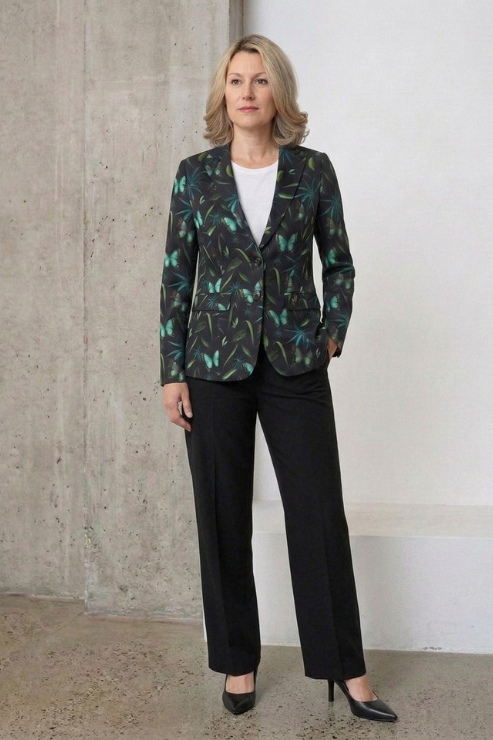
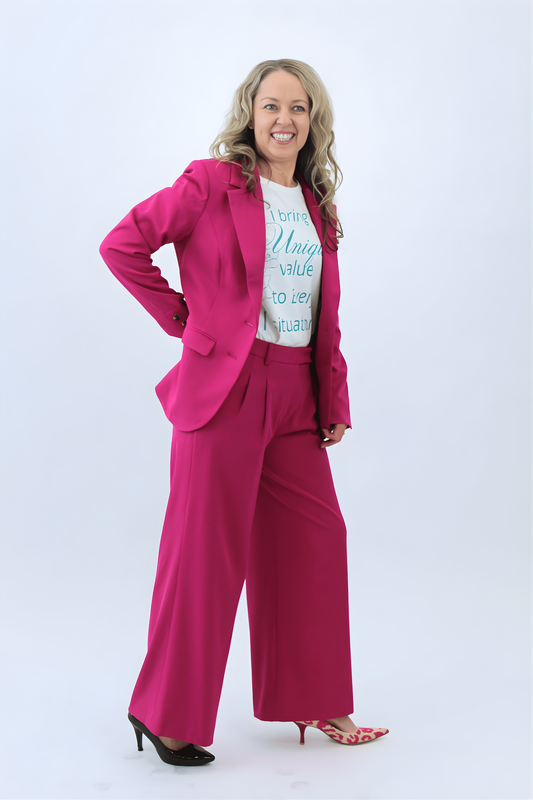
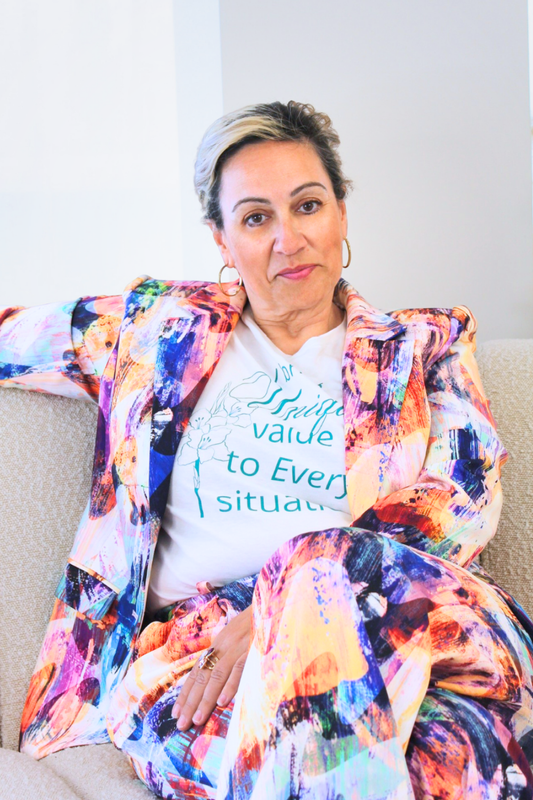
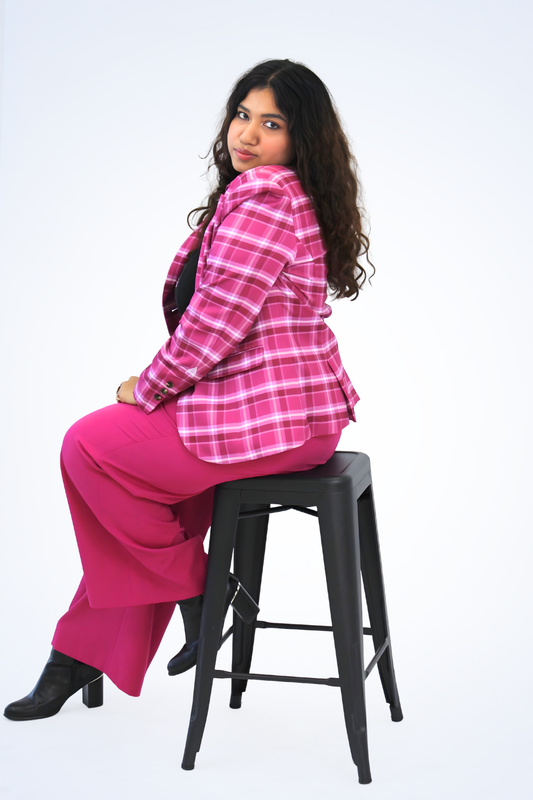
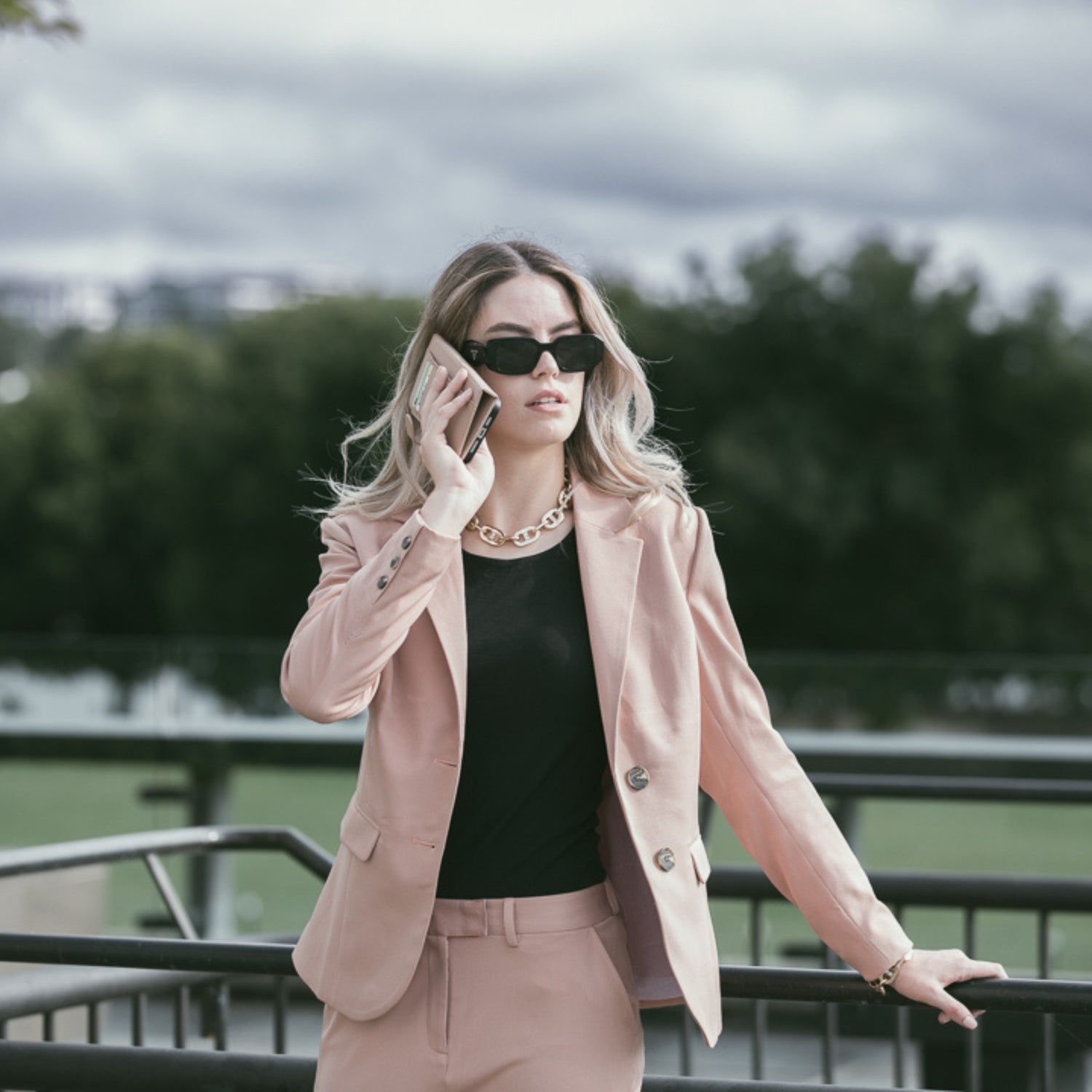
If there is one piece of clothing that acts as a shortcut to professional confidence, it is the blazer. A well-fitted blazer provides structure to your shoulders, which subconsciously projects authority and readiness. A blazer allows you to "level up" almost any base outfit. You can pair it with tailored trousers for a classic look, or even over a high-quality midi dress to add a professional edge.
Psychologists often refer to a concept called enclothed cognition, which suggests that the clothes we wear don't just change how others see us, they actually change how we think, act and perform. When you slip into a blazer, the structured silhouette and defined shoulders act as a physical "anchor" for your mindset. Because we socially associate blazers with leadership and competence, wearing one can trigger an internal shift toward higher abstract thinking and increased self-assurance. It functions as a form of "cognitive armour," providing a sense of containment and poise that helps settle pre-interview nerves. By aligning your external image with a position of authority, you aren't just performing the role of a professional; you are signalling to your own brain that you are prepared to inhabit it. The interview panel will then see it too.
Ready to find yours? Explore our Confidence Blazers — designed to help you walk in and own the room.
Navigating Trousers and Skirts
Bottoms are often the unsung heroes of the interview outfit. They need to be comfortable enough to sit in for an hour without digging in or wrinkling excessively.
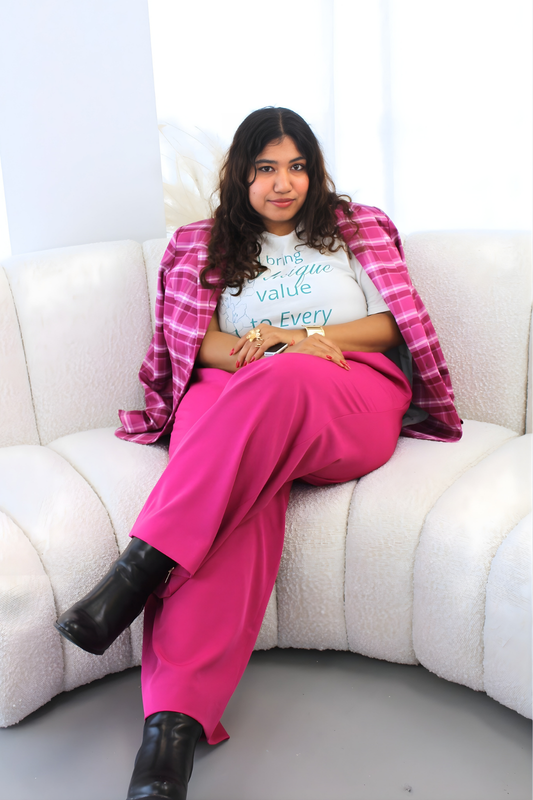
For trousers, a high-waisted, wide-leg cut is currently very professional and flattering. It offers a modern silhouette that feels sophisticated rather than dated. If you prefer skirts, ensure the length is appropriate for a professional setting, generally hitting at or just below the knee.
Avoid fabrics that crease the moment you sit down. Test your outfit at home by sitting in a chair for fifteen minutes. If you stand up and the lap area is a map of wrinkles, it might be worth reconsidering that specific bottom. For a complete, polished interview look, our Suits collection pairs blazers with matching trousers so you never have to guess.
The Shirt: Crisp, Clean, and Honest
Your choice of top should be simple. A crisp white button-down is a classic for a reason, but it isn't the only option. Silk or high-quality viscose blouses in muted tones or rich jewel colours can also work beautifully.
The key here is the neckline and the transparency. Ensure that your choice is modest enough that you the neckline covers any cleavage and that it is not showcasing your bra in any way. It also needs to be a good fit so that you aren't tugging at it throughout the meeting. You want the interviewer to be looking at your face, listening to your brilliant ideas, not wondering if your buttons are holding up.
Footwear and Accessories
Your shoes should be clean and, most importantly, walkable. There is nothing that undercuts a confident entrance like wobbling on heels that are too high or uncomfortable. A sleek loafer, a block heel, or a refined flat are all excellent choices.
When it comes to accessories, less is usually more. Choose one or two pieces that feel like "you." Perhaps it's a pair of meaningful earrings or a watch that belonged to someone you admire. These small touches can act as personal talismans, reminding you of your strength and the journey you've taken to get to this interview.
The "Senses" Check
Before you leave the house, do a final check.
- Sight: Is everything lint-free and steamed?
- Touch: Do you feel restricted? Can you breathe and move your arms freely?
- Sound: Do your shoes clack too loudly? Does your jewellery jingle when you gesture?
Eliminating these small distractions allows your personality and your professional history to take centre stage.
The Ethical Choice
Supporting small businesses and independent designers isn't just a lifestyle choice, it is a professional statement. It shows you are a person of principle who values craftsmanship and fair practices. When you are asked about your outfit, or simply when you know the story behind what you are wearing, it adds a layer of integrity to your presence.
Many small brands offer better return policies and more transparent sizing guides than major fast-fashion retailers because they care about the customer experience.
Reclaiming Your Confidence
It is normal to feel like you are being overlooked in professional spaces, or to feel that "imposter syndrome" creeping in as you prepare for a big interview. But remember, the clothes don't make the professional, they simply introduce her.
You have the skills, the ambition, and the experience. Your outfit is simply the vehicle that carries you into the room. When you choose pieces that align with your values and make you feel physically comfortable and mentally sharp, you are setting yourself up for success.
If you are currently looking for pieces that command respect and reflect your inner drive, we invite you to explore our curated collections at Peak Women. Start with our Suits collection for a complete, interview-ready look, or browse our Confidence Blazers to find the piece that introduces you before you even speak.
You have worked hard to get to this point. Now, dress like the woman who is ready to take the next step.
Confidence to you.